
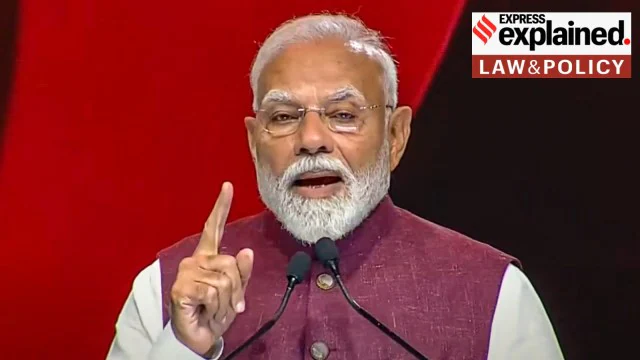
Why in news:- What was the colonial-era Dramatic Performances Act, mentioned by PM Narendra Modi?
About
- Dramatic Performances Act, 1876, gave the (then British) government powers to “prohibit public dramatic performances which are scandalous, defamatory, seditious or obscene”.
- The Dramatic Performances Act, 1876 was passed during the tenure of Lord Lytton
- This law was among those enacted by the British to clamp down on the budding Indian nationalist sentiment following the visit of the Prince of Wales, Albert Edward, to India from October 1875 to May 1876.
- The law was formally repealed in 2018 as part of the Narendra Modi government’s exercise to weed out obsolete laws. However, the Dramatic Performance Act had not been a “valid law” since at least 1956.
Article 372
-
Article 372 of the Constitution states that laws in operation at the time of Independence would continue to be in operation.
However, colonial laws do not enjoy the presumption of constitutionality – which means that when a colonial law is challenged, the government must defend the law for it to be valid.
- Other laws – those enacted by the Parliament of independent India – are deemed constitutional unless declared otherwise, which means that when challenged in court, the onus is on the petitioner to prove that the legislation violates the Constitution.
- The Dramatic Performances Act, 1876, though declared unconstitutional by the court and no longer in use, was only formally deleted by Parliament through the Repealing and Amending (Second) Act, 2017.